Pipelines
PIPELINE.SLE — pipeline operating modes and fighting flow complications
Stable flow and less energy to transport the well stream.
PIPELINE.SLEA module of the Solution Line Engineering ecosystem: it runs on the single asset model together with the other solutions and is linked to them by one data chain.About the digital twin →
Problem
A gathering network with complex terrain and a high gas-oil ratio behaves unpredictably: gas and terrain slugs, wax, hydrates, scale. Pigging and dosing follow a schedule rather than condition, production is lost to excessive line pressure, and sections with poor energy efficiency stay invisible.
Solution
PIPELINE.SLE builds a hydraulic twin of the gathering network and water lines, localises complications along the pipe, forecasts flow restriction and hydrate formation and selects measures: pigging, inhibitor injection, a change of line pressure and redistribution of wells. The effect of every action is recalculated on the model and confirmed by telemetry.
What the solution sees
One storyline at the demonstration field
STEP 01
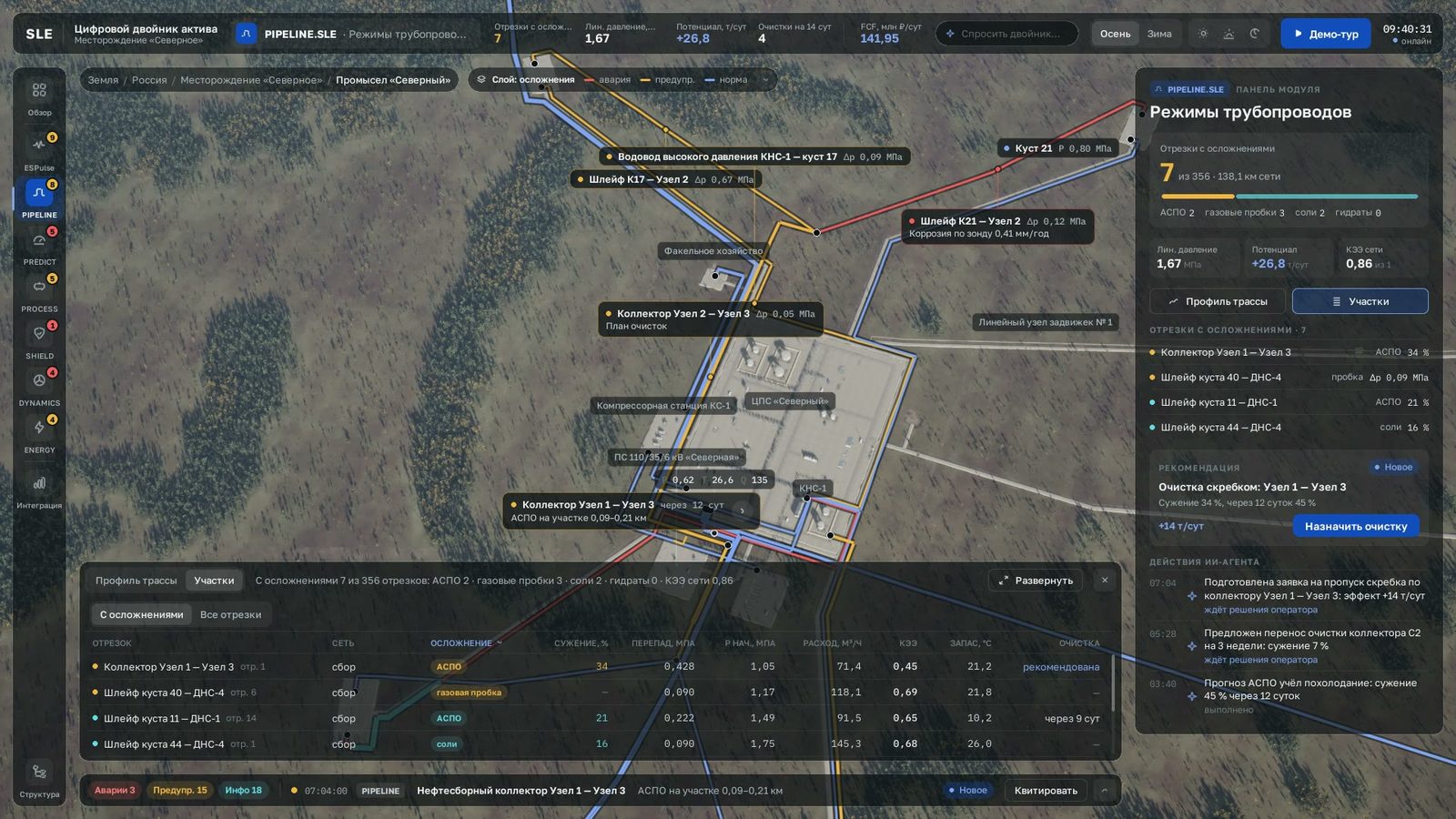
Sections with complications
A table of gathering network sections: wax, scale and gas slugs with restriction and pressure drop for each. 36 sections, 138 km.
STEP 02
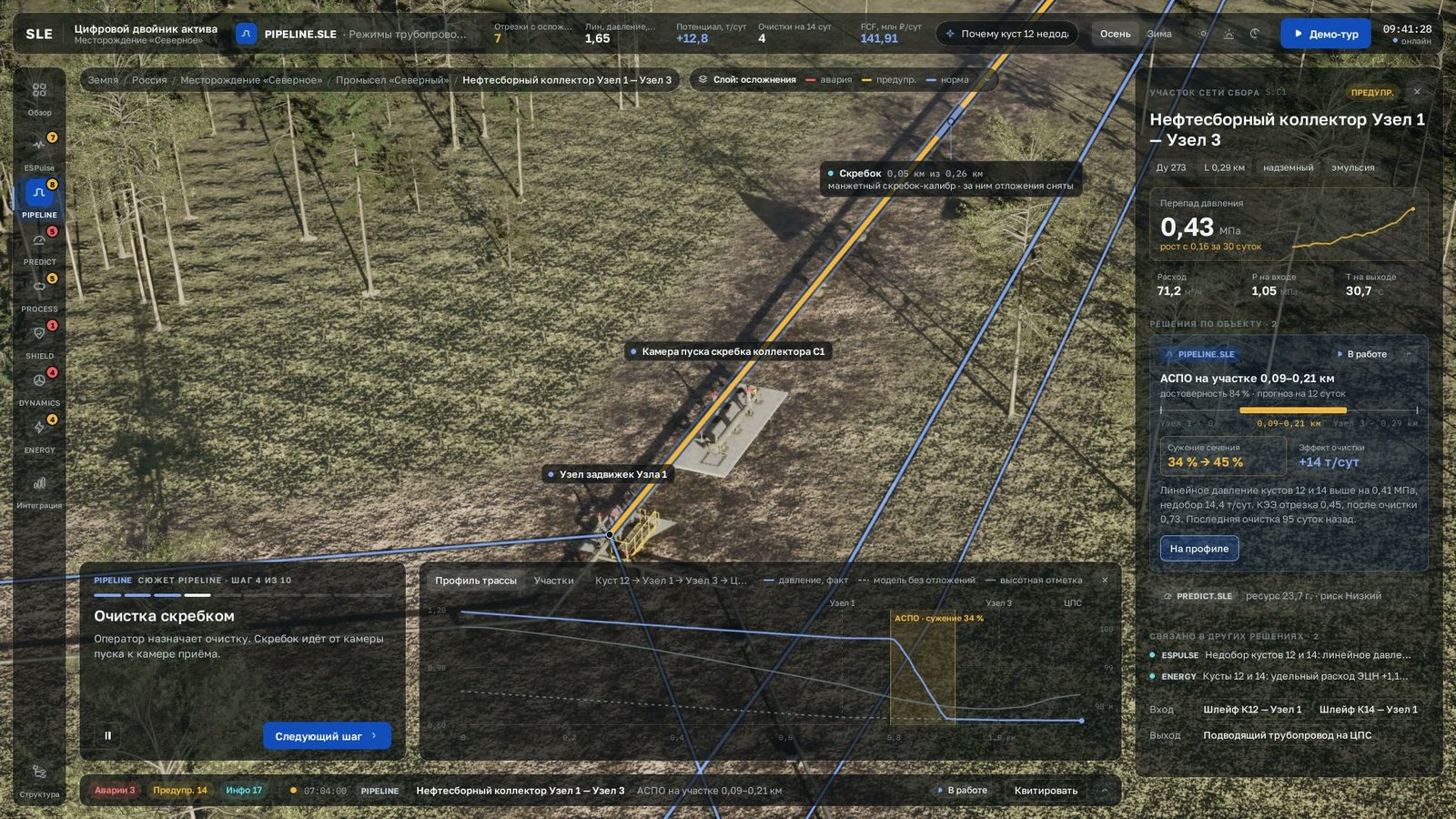
Pigging
Trunk line Node 1 — Node 3: the flow area is restricted by 34%, pads 12 and 14 lose 14 t of oil per day. The operator schedules pigging, the pig is visible on the model, the twin recalculates the restriction and pressure drop.
STEP 03
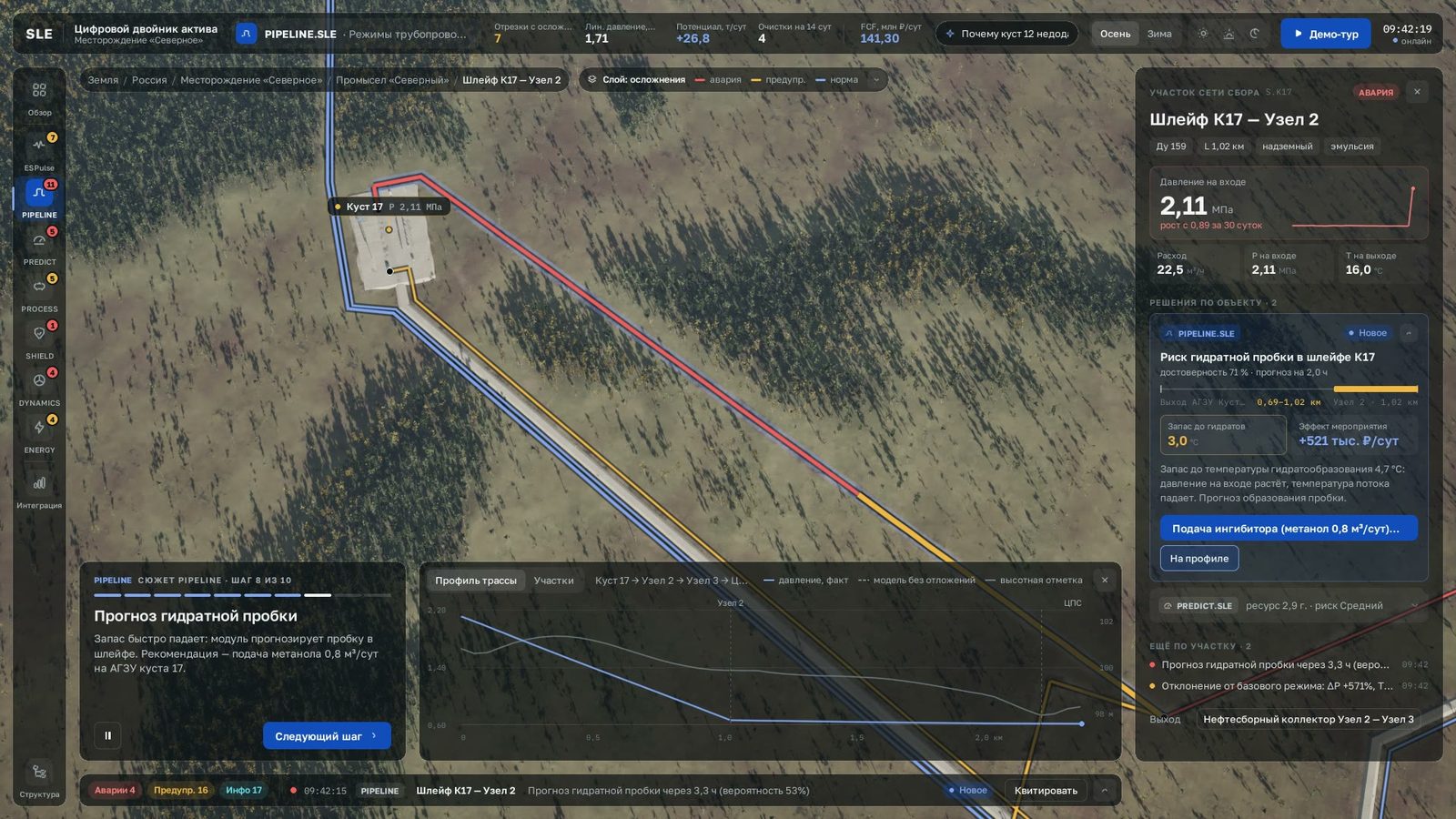
Hydrate plug forecast
On the pad 17 flowline the hydrate margin is melting away. The solution forecasts the plug in advance and recommends 0.8 m³/day of methanol at the group metering station — the problem is removed before it happens.
Ask the twin
“Why is pad 12 underproducing?”
Pads 12 and 14 underproduce because of wax. Trunk line Node 1 — Node 3: the flow area is restricted by 34%, line pressure is 0.41 MPa above normal, shortfall 14 t/day. Pigging is needed.
An answer with sources; the “Show on scene” button flies the camera to the object.
How it works
01DataTelemetry, route profile, lab analyses
02ModelHydraulic twin of the network by section
03AnalysisLocalisation of complications, restriction and hydrate forecast
04SolutionPigging, inhibitor, pressure, well redistribution
05EffectRecalculation on the model, confirmation by telemetry
Capabilities
Mode monitoring
Localisation of slugs, wax, hydrates and scale tied to a pipe section.
Restriction forecast
Flow area by section today and in 12 days; pigging is scheduled by forecast, not by calendar.
Hydrate margin
For every flowline the margin to the hydrate formation temperature and a plug forecast are calculated.
Selection of measures
Pig, methanol, line pressure, well redistribution — with the expected effect in tonnes.
Transport energy efficiency
Finding sections where pumping energy is wasted.
Extra production
Reducing back-pressure at the pads where it is safe for flow stability.
Profiles and tables
Pressure and elevation profile along the route, a table of sections with restriction and pressure drop.
Integration with production
The transport mode is selected together with the well operating modes.
Business effect
+12%
energy efficiency of well stream transport
case · high-wax asset
−17%
CAPEX of the integrity programme through pigging frequency
case · pigging optimisation
+14 t/day
pad production gain after pigging the trunk line
demonstration on the twin
Case figures were obtained in pilot operation and deployments at specific facilities; “demonstration on the twin” values come from the storyline at the model field.
Use cases
- Production shop engineer sees a section with a 34% restriction and a “pig in 12 days” recommendation instead of pigging by calendar.
- Pipeline engineer gets a list of sections with poor energy efficiency and a recommendation to route gathering through the neighbouring node.
- Head of production assesses the extra production potential from lowering line pressure by pad.
Integrations
Pipeline telemetry and DCS, production management system, GIS, LIMS; on one network model with PREDICT.SLE and SHIELD.SLE.
Cross-cutting chains
- PREDICT.SLE — Corrosion of the same section
- ENERGY.SLE — Lift energy under back-pressure
- ESPulse.SLE — Pad shortfall due to network pressure
- Article: what an asset digital twin is and where to start →
Case studies and materials
All case studies →We will show PIPELINE.SLE on your asset's data
A demo online or on site; then a pre-project survey of one facility and pilot operation with a measured effect.